
2016-17 Innovative Teaching Showcase
Ideas
IDEA #6: Chalk Talk Discussion
“A silent and visual way to engage in discussion without speaking.” 1
Learning Intention
Engaging in critical discussion can be challenging. Many students struggle with the pressure of speaking out loud in front of the group or having to articulate thoughts they are only beginning to develop, so many class discussions are dominated by the same few students who are willing to speak up. Additionally, some topics can get heated quickly and could benefit from some extra thinking time to manage emotions. Chalk Talk is a “safer” way to include a variety of “voices” in a discussion without making any noise at all.
Overview
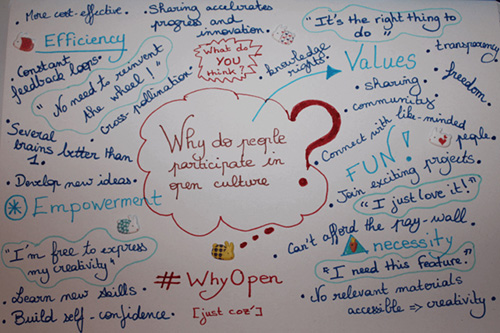
Rather than an oral discussion, the conversation takes place on a whiteboard or chalkboard, where a concept map or thread-style comments and responses can be added anytime by anyone.1Chalk Talk encourages students to offer responsive comments and questions that will extend the conversation in a less threatening way.
Instructions
1. Write a question inside a circle in the center of the whiteboard. Make several dry erase markers available to students.
2. Identify expectations; explain to students that this is intended to be a silent activity and that many people may participate at once. Remind them to take turns writing and making room for others to participate.
3. Invite students to write responses to the question whenever they are ready. They may also write responses to classmates’ ideas, pose questions, or draw lines to show connections (or distinctions) between ideas.
4. Give students time to add to the board as well as take it in. Sometimes there will be a lull while students read or contemplate the ideas; hold space for those pauses. When a longer silence ensues, conclude the activity.
5. Wrap up by asking students to summarize orally what they have learned. They might share what surprised them about the exercise or the ideas, offer new insights they gained, or pose new questions.
Considerations
- Allow at least 10 minutes for students to write and respond, and a few more minutes to debrief.
- In larger classes, this could also be done in smaller groups of 10-20 using poster paper and pens or crayons.
- Try structuring the exercise in a variety of ways: you might ask students to write only questions or only one-word answers, or even let them respond with pictures.
- Build on the activity by adding more to it at the end of the class session or even keeping it to return to later in the quarter.