Fostering Agency in Learning
Theme
Fostering Agency in Learning
Travis Tennessen
Director of the Center for Community Learning
A Conversation with Travis Tennessen
Agency as Participating in Real Life
Why is it important to foster a sense of agency and ownership of learning in higher education?
Well, I see public universities as one of the most important tools that we have as a society to foster rich, inclusive learning and to build the communities that we want to live in. I think one of the wonderful things about places like Western is that they're accessible to so many people who haven't had an opportunity like this to be in a rich space that can foster their learning and their discovery and their evolution as a person. And we need spaces like this to be as rich and healthy as they can be, so that we can build a bright future together, because it's going to take everyone and lots of gifts from lots of different personalities and lots of different cultures and lots of different places in order to respond to the challenges that we have in our time.
"I think one of the wonderful things about places like Western is that they're accessible to so many people who haven't had an opportunity like this to be in a rich space that can foster their learning and their discovery and their evolution as a person."
And so, yeah, I'm passionate about that in general and really passionate about doing it at a place like Western, because we're a place that all kinds of people from all different walks of life can make their way here and find something meaningful.
And I was just talking with a student outside the door five minutes before our conversation, here with her mom. She's a junior from Wenatchee thinking about coming here, and we just had a great conversation about how this is a space for exploration and growth. And she said, I think I'll probably come here. Because I think that's the vibe she picked up on, that vibe that people are here interested in their own work and discovering what's possible in their own lives and how they can serve their communities.
Our job as faculty is not about filling people up with content. It's about creating spaces and stewarding spaces for people to participate in real life, participate in the journey of learning alongside others, participate in their own reflection. And that we have the job of holding that space for them because they are responsible for their own learning journey. They are complete, whole people. They are not vessels to be filled. They're complete, whole people that we can create environments for that help them contribute to a wonderful, thriving society and help them build rich, meaningful lives. So that, to me, is the core of what we're trying to do as educators. And what I focus on in my work now and try to help other people focus on.
"Our job as faculty is not about filling people up with content. It's about creating spaces and stewarding spaces for people to participate in real life, participate in the journey of learning alongside others, participate in their own reflection."
How does your work at the Center for Community Learning build connections for faculty and their students?
Well, a lot of the work that we do is to try to create spaces where people can get engaged with real world learning and to help faculty and staff build those spaces throughout campus. So we do a lot of work helping faculty and staff at Western build relationships with other leaders and other community organizations in schools and tribal organizations and local government so that they can talk about what their work looks like and see where the potential intersections might be, where they might co-create spaces for students to learn in performing, do research in, learn about different parts of our region's history and all of that. So that is a primary passion of mine, and it's part of why I've transitioned into a role like the Center, rather than being in a traditional faculty role myself, because I loved doing that work as a faculty member at University of Wisconsin and at Penn State, and could create those spaces. But I could see that there were not as many of those rich collaborative learning spaces across the campus as there could be. But in a role like this, and in a Center like our center where Laurel and and Ellie and I work, we can help people create many, many, many of those spaces.
One of the main programs that we run is called the Community Engagement Fellows. When I came to Western in 2015, I was asked to create a faculty development program that got more faculty involved in high quality, community-based learning with their students. And so I went and talked with a bunch of the newly hired faculty at Western to see what they were interested in, what along those lines and what I heard from them was, "I've done that kind of work elsewhere in graduate school or as a faculty member. I'm really interested in it. I don't know much about this community. I don't really know how to plug into it or what's happening, what the history is in relation to my discipline. And I don't really know other people around campus either. I don't have a lot of people, even within my department or outside my department, to brainstorm with." So I think faculty come with a passion for fostering agency and learning for their students. Building real-world opportunities for them and really bringing them in and dialoging with them about what kind of learning journey they're on and trying to shape the class activities and research that they're doing and the projects that they're doing to meet that journey that each student is on.
"So I think faculty come with a passion for fostering agency and learning for their students. Building real-world opportunities for them and really bringing them in and dialoging with them about what kind of learning journey they're on and trying to shape the class activities and research that they're doing and the projects that they're doing to meet that journey that each student is on."
And so we designed a program to help that happen. The Community Engagement Fellows was about getting people together to talk about the work that they want to do to meet people off campus that work in organizations that relate to their work, and to help them then co-create spaces that were mutually beneficial, met a community need, and also created that really rich learning experience for Western students so that if someone comes here to learn about environmental justice, they're not doing it in a vacuum. They're doing it alongside environmental justice organizations in our community. If they're here to learn about water resources and chemistry, they're going to do that by thinking about Lake Whatcom and with the Institute for Watershed Studies, or other places. I see that happening all across campus, and especially with these faculty that we're showcasing this year.
Faculty Making a Difference
What is your take on how the featured instructors in the Innovative Teaching Showcase are doing this work?
It was interesting to see the through-points of people talking about universal design principles and fostering, you know, competency and capability and just the language that they used, peer learning. There were lots of overlaps.
Lauren Dudley had learning as a social endeavor that she puts in her syllabus and that resonates so much with me and how I think of myself as a learning facilitator and with social learning theory also. We can see that in what Lauren wrote about that—there's no one way to be a chemist—that that she had to learn that herself as a student way back when, that to have a faculty member see her and say, hey, I see who you are. I see what you're bringing into this space. I think you've got some gifts that can contribute to this field, not just be an observer in this field, not just do what you're told and on the assignments, but be someone producing interesting chemistry …and that she could take that identity on. And now design really wonderful courses, this really challenging organic chemistry course that she showcased to help them say, I can understand this and I can take on this material and this way of being into my own self and make it that I'm the only chemist. That's the way that I've ever been. I'm a unique chemist. There's never been a chemist like me. I think that's beautiful. I love how she wrote about that. So, that's the spirit I think we can cultivate in these spaces. If we see students as whole beings that we can help to grow, rather than incomplete beings that we need to complete. I think that there's a difference there. And then we're focusing on the person and we're not focusing on the content. So that's what I love fostering: help faculty members build those systems. But then faculty members build those systems in so many different ways.
"If we see students as whole beings that we can help to grow, rather than incomplete beings that we need to complete. I think that there's a difference there. And then we're focusing on the person and we're not focusing on the content. So that's what I love fostering: help faculty members build those systems. But then faculty members build those systems in so many different ways."
Matthew Miller talked about that and how what he is trying to do is to bring people into practice to say, what does it mean to be an educator? How do I think of myself in that space? What can I do in a given situation in order to try to take advantage of the social engagement that we have? The responses that I'm getting from the students that I'm working with, what's happening in my own mind, in my own body. And to do that iteratively, and to do that in community with other students so that they're watching each other, they're giving each other feedback. He's able to be a participant alongside them, giving them feedback, helping them think about things that are informing their practice, think about and observe what the other students are doing. All of that is recognizing them as really whole, complicated people on their own educational learning journey.
So there's like the reflection dimension that he's helping them disentangle. Then there's the present practice that he's helping them experience as a teacher. So he's designing learning spaces for them all, anticipating them, creating learning spaces for other people in the future and so and holding all of that in one class, holding those different dimensions the past, present, and future all together is such a challenging, wonderful thing to do. But he really honored the complexity of that work that those people are going to go off and do, and all the thousands of lives that they will shape doing that work will be so shaped by how he's crafted that classroom.
Thinking about Christine Johnson and the Wiki that she and her students are doing: Helping create a public history resource and that they feel like they're making a difference. That's the core of what we're trying to do, is help people learn how to make a difference and experience that in themselves, and know that they're capable of doing that in the future. What else are we doing here?
So they're not talking about public history, they're doing public history, and the students feel so powerfully that they're making a difference because they are making a difference. That's what we love helping people design. And that's what we see faculty doing all across Western in all different disciplines. But the ones that we're showcasing in this year are doing a magnificent job of that in their own disciplines.
Social Learning with Talk Tiles
Can you please share a bit about how you started using Talk Tiles to add depth to conversations?
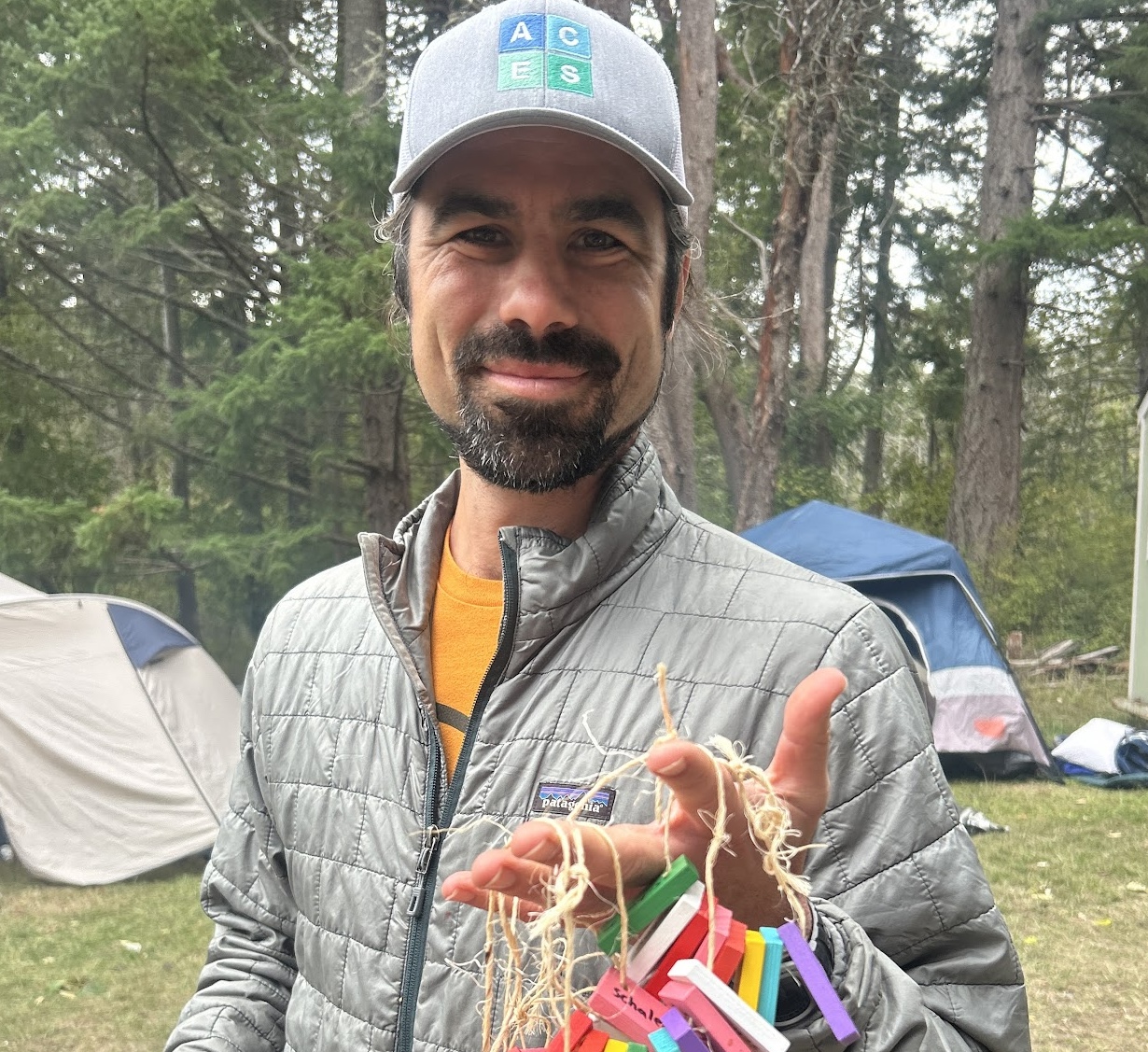
So talk tiles came from my desire to have people in the social learning spaces that we host, like community engagement fellows and like the community forums that we have. They came from my desire to help people notice all the different dimensions of learning that they were experiencing. So in social learning theory, there are eight types of learning. And so I thought I need eight objects ideally of different colors that I can use, I can put out in front of people and then have them say, oh, here's a feeling that I have from this experience that we've just had together, or here's a new possibility that's opened up, that's potential value. In social learning theory, feelings have immediate value. Or here's an action that I want to take that's applied value. Someone doing something with the experience that they've had or realized value. Here's a change that I want to see a tangible change in the world. Or here's how I'm thinking about myself a little bit differently because of the experience that I've had. That's that identity tile, or I feel like I've really been supported in this space or not supported, okay, I've got to have the support tile for that. We need to think about why does this learning, why does this experience that we have matter. That's important to us and that's strategic value. And then, how do I see myself in this community? How do I see myself as a learner in this space? That's what the place tile is about. That's in social learning theory: orienting value.
So, we started using these little colorful dominoes to express these different uses. And I loved using them. I remember the first time I used them in the classroom was with my first year interest group seminar class and it became just this wonderful routine every week that we would pass a set of talk tiles around and have each person pick one tile to talk about their experience being a brand new student at Western. And the group became so skilled with them because they knew that activity was coming and they knew how to point at different dimensions of life and to say, hey, my identity is really kind of being challenged here. I'm kind of thinking about my own relationship with my own hometown and how is that changing? Or, I came here thinking I was going to be a geology major, and now I'm not thinking I'm going to be there anymore. And I'm not really sure who I am. Or, hey, what's a cool action I did? Hey. I went, you know, I went out kayaking for the first time. It was such an amazing experience. So just that simple activity really helped us bond as a group and helped them dig into this really rich, complicated experience of becoming a new college student.
What are some good ways to use Talk Tiles?
So, you can use talk tiles for something like a reflection activity. You can use them as a planning tool, also. I used them with our engineering faculty two years ago to think about their journey as a department. What kind of value did they want to be creating for their students, for each other over the course of the whole next year? So we could say, what do we want this work to feel like? Dig into that. What kind of possibilities do we want to open up for our department for each other? What actions do we want to take? What tangible changes do we want to see? How do we want to be recognizing and reflecting on our identities as we go through. So, it can be used as a planning framework also. And students can do that for themselves. Laurel Hammond does this really beautifully with our students and community employees. The students that work through our office and go do work with a bunch of different community organizations, all around town do reflections regularly, using those tiles as their prompts to think about their own learning journey, as they're working with youth out in the schools, as they're doing community garden work, as they're renovating the curriculum for Bellingham Public Schools to make them more racially just. They can use that tool in order to reflect on that rich experience.
Connected Learning Spaces
What do you wish all learning spaces in college were like? What's the dream?
My dream would be that our default way of gathering would be sitting in a circle together, where the faculty member was a member of the learning community alongside the students. Even if we weren't physically that way. That would be the mindset and that we were… bringing… That we were learning each other's stories before we just jumped into the content of the topic. The opening of the House of Healing just happened yesterday, and there was an elder from New Zealand who spoke, and one of the things he said that really resonated with me was that the way we've divided up learning into these different disciplines is not reflective of real life, and that indigenous cultures know this. We all know it in our hearts that these disciplines are false divides that make it difficult to recognize the whole person. And so I think that's part of my dream is that even though we have ourselves divided into these different disciplines, that each discipline recognizes its responsibility to point at the universal human experience. So that a chemist is thinking about the whole earth, the past, present and future, the ecology, the sociology, the politics, all of that wrapped together so that a historian is thinking about all those elements as well. Thinking about the chemistry, thinking about the physics, thinking about the materials that are being used, how humans are engaging with their physical environment over time so that educators are not just saying, my job is to do something in this classroom, but they're saying my job is to help them navigate this broad and complex world.
So, if we can remember that we're connected to the whole when we're doing our specific jobs in our specific disciplines, the jobs will be more meaningful to us as staff and faculty. And because they're more meaningful to us as staff and faculty, they will be so much richer and more inclusive and more practically useful to the students that come in. So, we know who we are and where we come from and what we're trying to do and see ourselves as interconnected. We can help the students do that as well. So that's a huge part of my passion to help people find their way there, as members of the Western community and to try to do that myself. And that's what Laurel and Allie are trying to do, also, for the students that work in our office and for all the different partners that we work with around campus and in the broader community and around the world; just to be those curious, engaged and mindful people.
"So, if we can remember that we're connected to the whole when we're doing our specific jobs in our specific disciplines, the jobs will be more meaningful to us as staff and faculty. And because they're more meaningful to us as staff and faculty, they will be so much richer and more inclusive and more practically useful to the students that come in."
How else does the Center for Community Learning build relationships?
So, in the students and community program that Laurel Hammond has really created and oversees, what we're trying to do is help students from the beginning of their journey at Western have paid opportunities to work out in the community, addressing issues that are of interest to them and also that relate to their academic work and their academic journey, and that help them build relationships with the broader community. So, we have students out working with community organizations and meeting together to talk about how that work intersects with their lives at Western and participating in and helping to host our Community Engagement Fellow spaces. And so the systems like that, where we're not just sending students out to do some volunteer work, that doesn't mean anything to them. We're saying, who are you? What do you care about? How can we craft a position for you that meets Western's needs and strategic goals that meet the community needs, and that meets your interests as a learner?
What is an example of a learning space you work with in the community?
I mentioned before the idea of creating spaces for rich learning, and I think City Sprouts Farm that's in the Birchwood neighborhood that we run is a profound example of that in so many ways. But one of them is that there we had this tiny farm project that was made. It was a student idea and student-run project that for a few years, students designed and managed their own piece of City Sprouts Farm and put those vegetables into boxes and distributed them for free to other students. So, they got to really practice the whole process of running an urban farm. And many of them have gone off to do that work after they've graduated. They're working for local farms here and leading other local sustainable agriculture efforts. And I just love that we have that space for students to experiment and grow things and practice and make mistakes and decide with each other as a team what should come next and navigate rainstorms and navigate funding uncertainties and neighbors and all that stuff. Because that's real life. That's learning in the real world. So, it's so special and meaningful to be able to steward that space as well as part of the Center for Community Learning's work.