Fostering Agency in Learning
Portfolio

Matthew Miller, Ph.D.
Department of Elementary Education
Teaching for Agency through Structured Practice
Developing Agency via Course Structure
In my elementary education foundations course, I design learning experiences that position teacher candidates as emerging professionals rather than recipients of educational ideas. Early in the course, I often notice how strongly students draw on their own experiences as learners when imagining what teaching looks like. That starting point is valuable, but it can also limit how they see the possibilities of practice.
"I design learning experiences that position teacher candidates as emerging professionals rather than recipients of educational ideas."
The course engages themes such as culturally responsive teaching, Universal Design for Learning, social-emotional learning, classroom management, and trauma-informed practice. Rather than approaching these themes as ideas to understand, the course is structured so that students work with them in practice through cycles of rehearsal, reflection, and revision.
Research on learning to teach points to the importance of structured opportunities to approximate practice and analyze instruction, particularly as novices work to move beyond durable images of teaching shaped by their own experiences as students. More broadly, this points to a principle that extends beyond teacher education. Learning deepens when students are positioned as participants in meaningful work rather than observers.
This approach is reflected in the structure of the course. Students design, teach, and analyze learning experiences, articulate and revisit their beliefs about teaching and learning, and examine how those beliefs shape their instructional decisions. Over time, this work supports the development of professional judgment through cycles of practice, reflection, and revision.
Agency develops when students are asked to make decisions, not just demonstrate understanding. This perspective invites us to look more closely at how our courses are designed, and where students are positioned to make decisions, interpret ideas, and revise their thinking.
"Agency develops when students are asked to make decisions, not just demonstrate understanding. This perspective invites us to look more closely at how our courses are designed, and where students are positioned to make decisions, interpret ideas, and revise their thinking."
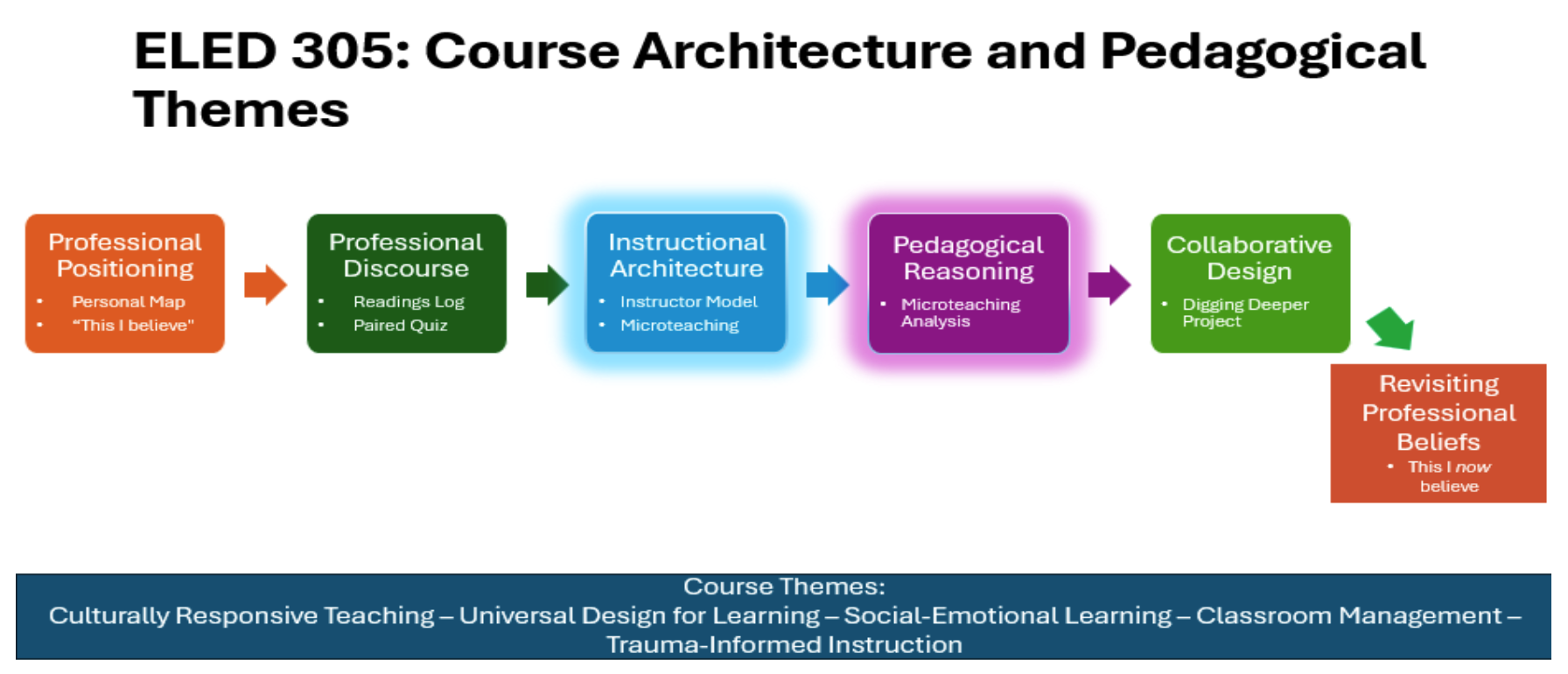
Figure 1: ELED 305 Course Architecture and Learning Experiences
Figure 1 Description
Figure 1 illustrates the course architecture as a developmental sequence, showing how candidates move from professional positioning and discourse into cycles of practice, analysis, collaborative design, and the revision of beliefs over time.
From Exposure to Participation
Early in ELED 305, something predictable happens: teacher candidates reach for their own schooling when they try to imagine teaching. That instinct makes sense, since it’s the most detailed record they have of what classrooms look like. But it also tends to flatten possibility. If the only teaching you can picture is the teaching you received, you’re already working with a limited repertoire. You’re positioned as someone who received an education, rather than someone who shapes one.
The course is designed to interrupt that pattern. Topics such as culturally responsive teaching, Universal Design for Learning, social-emotional learning, and trauma-informed practice are encountered not as ideas to absorb but as practices to enact, analyze, and revise. The organizing principle is agency: the goal is not just that students understand these frameworks, but that they develop the judgment and confidence to use them.
"If the only teaching you can picture is the teaching you received, you’re already working with a limited repertoire. You’re positioned as someone who received an education, rather than someone who shapes one. The course is designed to interrupt that pattern."
Practicing Through Structured Rehearsal
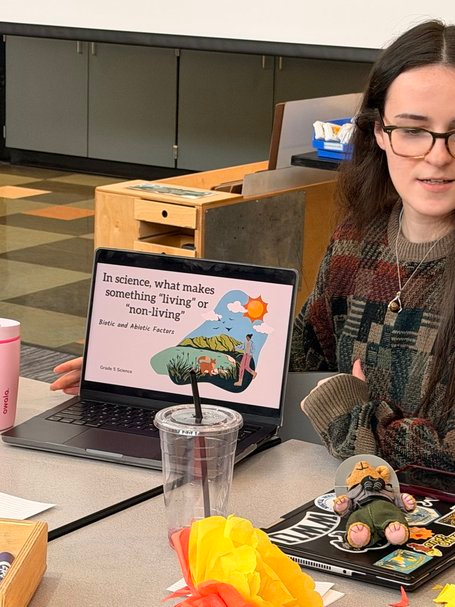
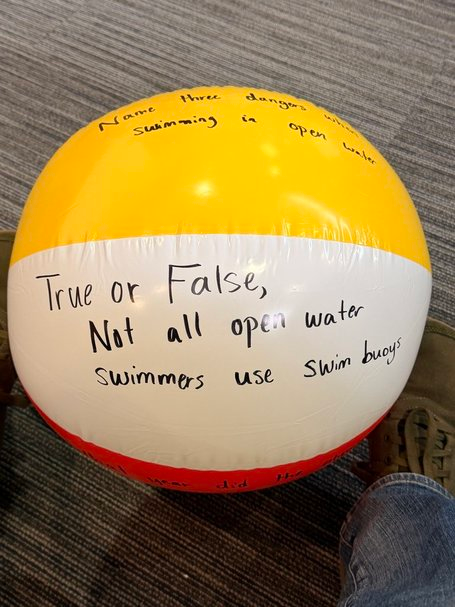
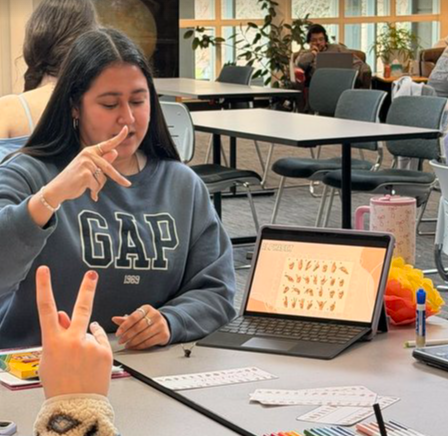
The most visible expression of this is microteaching. Students first observe and analyze models of instruction, then design and teach short lessons of their own, making real-time decisions about how to engage learners, represent ideas, and respond to what’s unfolding in the room. The goal isn’t a polished performance. It’s an early, low-stakes opportunity to teach for real.
"Students first observe and analyze models of instruction, then design and teach short lessons of their own, making real-time decisions about how to engage learners, represent ideas, and respond to what’s unfolding in the room. The goal isn’t a polished performance. It’s an early, low-stakes opportunity to teach for real."
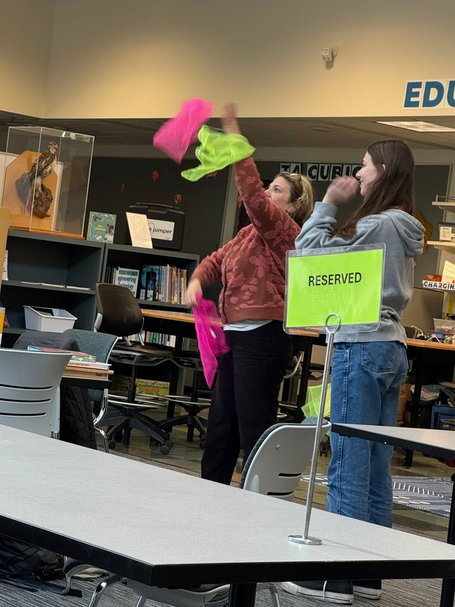
Students choose their own topics, which turns out to matter more than it might seem. Choice is one of the most direct routes to agency. It positions students as people with knowledge worth sharing, not just receivers of a curriculum someone else designed. Lessons in recent semesters have included the history of hip-hop, baking science, Palestinian embroidery (tatreez), welding basics, Día de Los Muertos, basketball analytics, and crochet. When someone teaches something they genuinely know, the class experiences what it feels like to be taught by someone with authority and care, and students begin to notice what that changes. It also surfaces a question they’ll carry into their future classrooms: whose knowledge gets to count?
"Choice is one of the most direct routes to agency."
After facilitating their own lesson and participating in several others, students analyze their teaching and engage with peers’ work. They identify moments of success, difficulty, and unrealized possibility. The pairing of practice and analysis is deliberate. Students do the work, then step back to examine the choices they made.
Designing for Collaborative Meaning-Making
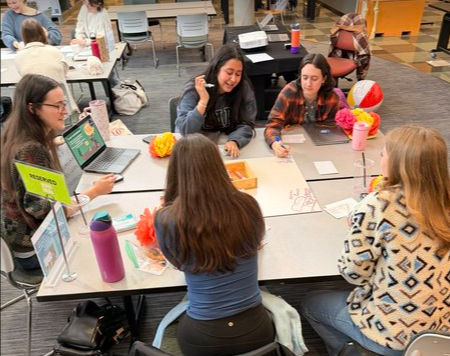
The “Digging Deeper” project extends this logic into collaborative design. Small groups investigate areas of practice such as classroom management, place-based education, and mindfulness, and then design and facilitate learning experiences for their peers. They apply instructional principles from the course, asking how to make the experience engaging, accessible, and responsive to the people in the room.
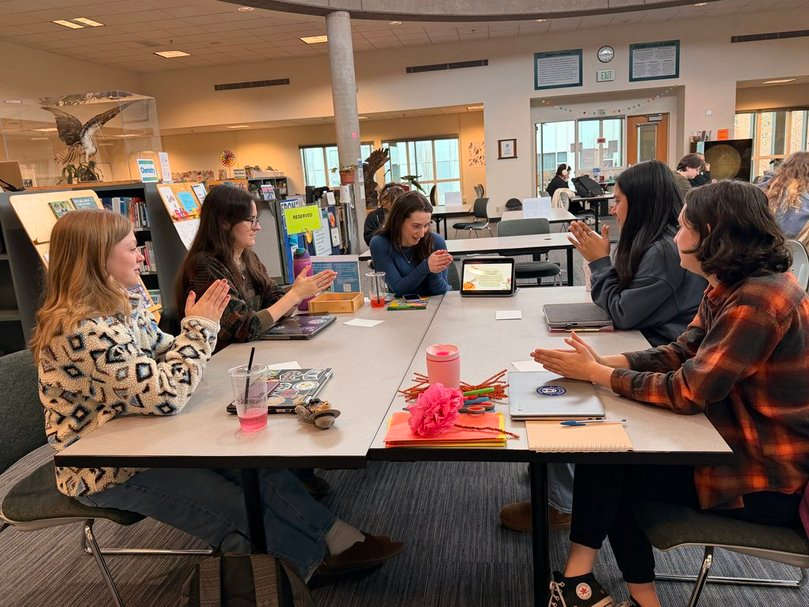
Here, agency takes a collective form. Students aren’t completing an assignment so much as taking responsibility for how their peers will learn and navigating ways to make shared decisions. In that sense, the project does something rare in an early foundations course: it puts students in a role that feels less like school and more like the collaborative work of professional teaching.
"Students aren’t completing an assignment so much as taking responsibility for how their peers will learn and navigating ways to make shared decisions. In that sense, the project does something rare in an early foundations course: it puts students in a role that feels less like school and more like the collaborative work of professional teaching."
Reading as Interpretation, Not Compliance
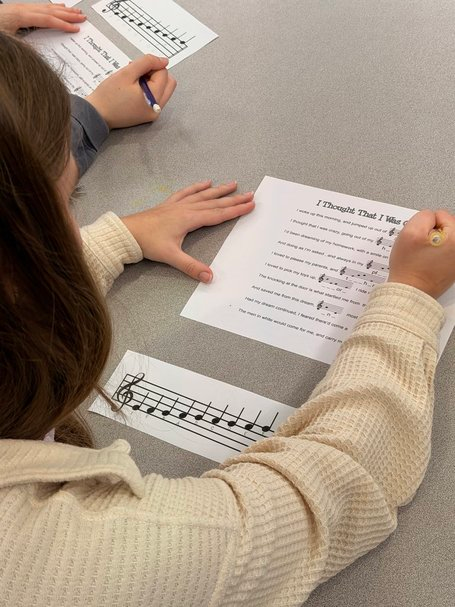
Reading in the course is structured as professional practice rather than coverage. A reading log and recurring discussion routines ask students to identify significant ideas, connect them to instructional decisions, and build shared language with peers. The shift is from passive reception to active interpretation, where students are asked not just to understand what a text argues, but to decide what it means for what they do. When reading is structured this way, students take intellectual ownership over ideas rather than just moving through content.
Developing Identity and Perspective
Two assignments bookend the course by asking students to articulate and then revisit their core beliefs about teaching. The Personal Map traces where those beliefs come from. An assignment adapted from the This I Believe public radio format invites students to name what they actually believe about teaching and learning, and then, at the end of the course, to examine how those beliefs have shifted or deepened.
This isn’t reflection for its own sake. It’s an attempt to make visible what is otherwise invisible: that every instructional decision is shaped by beliefs about learning, about students, about whose knowledge counts. Making those beliefs explicit is the first step toward being able to examine and revise them.
"This isn’t reflection for its own sake. It’s an attempt to make visible what is otherwise invisible: that every instructional decision is shaped by beliefs about learning, about students, about whose knowledge counts."

Designing for Agency, Access, and Ownership
The course is designed so that structure and flexibility work together rather than against each other. Students work within shared frameworks such as UDL, culturally responsive teaching, and structured rehearsal, while making genuine choices about how they engage, what they teach, and how they express their learning. Agency doesn’t come from removing structure; it comes from designing structures that invite meaningful participation.
"Agency doesn’t come from removing structure; it comes from designing structures that invite meaningful participation."
What ties these experiences together is a deliberate effort to connect coursework to future practice. Microteaching puts students in the position of making the kinds of instructional decisions they’ll face in their own classrooms. The Digging Deeper project mirrors the collaborative planning that is central to professional teaching life. When students experience that connection, the work stops feeling like coursework and starts feeling like preparation. The question shifts from “What does the professor want?” to “What do I think, what do I know, and what can I do with it?”
"The question shifts from 'What does the professor want?'' to 'What do I think, what do I know, and what can I do with it?'"
Shared Examples
The following items are referenced in this Portfolio and shared fully in the Portfolio Resources section.
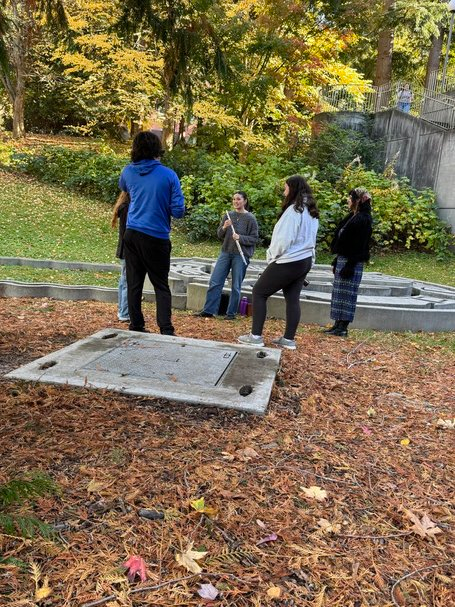
Microteaching and Analysis: Rehearsing Instructional Decision-Making
Microteaching is an opportunity for students to design and teach a short lesson grounded in their own interests and knowledge. More importantly, it is a chance to rehearse the work of teaching, to make intentional decisions about how to engage learners, represent ideas, and structure participation, and then to examine the effects of those choices. The goal is not performance but rehearsal: students try things out, notice what happens, and consider how their decisions shape the experience of learning.
Personal Map: Where You’re Coming From
The Personal Map asks students to reflect on the experiences, values, and perspectives they bring to teaching before they’ve done much of it. Rather than simply introducing themselves, students consider how their backgrounds may shape the way they think about teaching, learning, and working with children.
Readings Log: Reading as Professional Practice
Rather than responding to a single prompt, students choose how to engage with each reading based on what stands out to them, identifying new learning, naming questions, challenging an argument, or making connections to practice. This structure treats reading as an active, interpretive practice rather than coverage, and builds the habit of asking not just what a text says, but what it means for what you do.
Digging Deeper: Collaborative Design
In this group project, students investigate a shared topic in teaching practice and design an interactive learning experience for their peers. The emphasis is on building something together, synthesizing ideas, making shared decisions, and taking responsibility for how others experience the learning.
“This I Believe” / “This I Now Believe”: Articulating and Revisiting Professional Beliefs
Early in the course, students write a statement of belief about teaching and learning, drawing on their experiences, values, and assumptions. Near the end of the quarter, they return to that statement and examine how their thinking has developed. They may revise, extend, or complicate what they wrote earlier. Together, these two assignments make visible something that is easy to overlook: that beliefs about teaching shape instructional decisions, and that those beliefs can change.