
2017-2018 Innovative Teaching Showcase
Goals
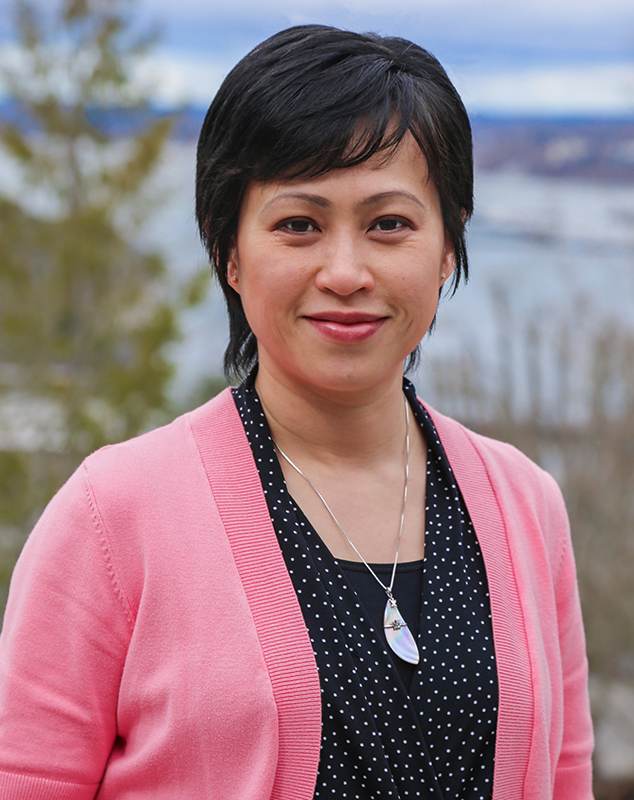
Ee Lin Lee
Department of Communication Studies
Ee Lin Lee's Goals
Critical Thinking
Source: Adapted from the California Academic Press's Learning Outcomes for Writing Proficiency
| Learning Outcomes | Definition | Course Outcomes |
|---|---|---|
| Identification | Accurately Identifies and Interprets Evidence | Seminar readings and discussions provide students opportunities to examine the assumptions of dominant scholarship and other scholarships that are muted in the field. Students identify and interpret the evidence provided by key scholars in the field and evaluate the credibility of empirical testing and interpretations. Real-life narratives and video observations further supplement other perspectives that are silenced in the communication scholarship. Students are encouraged to assess the impacts of the conclusions they draw, specifically the impacts to various minority groups. |
| Alternate Consideration | Considers major alternative points of view | |
| Accurate Conclusions | Draws warranted, judicious, non-fallacious conclusions | |
| Justification | Justifies key results and procedures, and explains assumptions and reasons |
Writing
Source: Adapted from Western Washington University's Learning Outcomes for Writing Proficiency
| Learning Outcomes | Definition | Course Outcomes |
|---|---|---|
| Rhetorical Knowledge | Focuses on a clear rhetorical purpose and responds appropriately to the needs of varied audiences and situations. | The research paper in COMM 420: Communication Theory requires students to critique a communication theory. Students conduct literature review, perform textual analysis to reveal the assumptions of their selected theories, and critique their selected theories. Asiacentric perspectives in theorizing is incorporated in their assessment and critique of the usefulness of the theory. The research paper in COMM 425: Intercultural Communication challenges students to reveal the nuances entailed in mundane conversation. At the start of the quarter, students audio-record and transcribe their small group conversations about their knowledge of Whiteness. As they learn about Whiteness studies throughout the quarter, they gain perspectives other than their own and criticism of practices that normalize Whiteness. Guided by theoretical framework in cultural discourse analysis, students then analyze the transcription and reveal the implicit knowledge in their utterances (e.g., their practices regarding or avoidance of talking about race with racial minorities, their assumptions about the proper way of being Whites, and their lack of courage and skills to confront racist comments, etc.). Papers mentioned above constitute full-range research studies, in which students propose a theory, collect data to test the theory, and report the findings and implications of the study. I provide writing workshops in class to teach writing techniques for empirical studies and one-on-one writing conferences to personalize students’ learning in writing empirical papers. |
| Critical Analysis | Develops, examines, situates, and communicates a reasoned perspective clearly to others. | |
| Composing Processes | Understands writing as a recursive process that involves drafting, re-thinking, editing, reconceptualizing. | |
| Convention Knowledge | Uses appropriate conventions for documentation and for surface features such as syntax, grammar, usage, punctuation, and spelling. |