
Fostering Agency in Learning
WWU PROFILES
While only a few instructors are fully featured each year in the Innovative Teaching Showcase, this Profiles section highlights additional work connected to the 2025-26 theme, Fostering Agency in Learning. The detailed profiles below now use placeholder content while the final selections are being prepared.

Max Barahona
Department of Finance and Marketing
Fostering Agency in AI Learning: From Tool Users to Organizational Shapers
In Max Barahona’s MBA course, AI Fundamentals for Managers (MBA 534), and his undergraduate course, AI in Marketing (MKTG 488), students do much more than “learn about” AI — they learn to shape how it is used in real organizations. The courses are built on a simple idea: managers and marketers should be confident, critical decision-makers around AI, not passive recipients of whatever tools land on their desks. To support that, the curriculum combines clear conceptual frameworks with energetic, hands-on exploration so that students practice judgment, creativity, and responsibility in equal measure.
- Students anchor their work in a real professional context (employer, client, sector they care about) throughout the term.
- Students analyze live workflows, data realities, constraints, and opportunities for AI in their chosen setting using his Five-Phase Framework (Diagnose–Design–Evaluate–Align–Adopt/Scale).
- Weekly labs give Students use weekly labs as a low‑stakes “sandbox” to experiment with tools like ChatGPT, Mistral AI, DeepSeek, Qinect, HeyGen, vibe-coding tools (Base44…), or agentic workflows (n8n, Twin...).
- Grading is focused on how thoughtfully students design prompts, critique
Major assignments are designed as authentic projects that students often describe as directly transferable to their work. In AI Fundamentals for Managers, students complete an organizational diagnosis and a small portfolio of AI experiments or pilot use cases, culminating in an adoption proposal that integrates strategic, ethical, regulatory, and governance considerations. In AI in Marketing, they progressively build AI‑enabled campaigns and content to address real marketing problems, working with real business, choosing channels, and creative strategies that matter to them. Across both courses, assessment emphasizes critical thinking, transparency about process, and reflexive learning over “perfect” outputs, and the classroom environment —blending short lectures, discussion, peer critique, and collaborative labs— invites students to share both successes and failures as they learn together.
Finally, both courses foreground the broader social, ethical, and geopolitical dimensions of AI so that students see themselves as agents in a larger socio‑technical system, not just users of software. Conversations about regulation, labour, data governance, and cross‑country differences in AI “tone” and policy prompt students to articulate their own values and imagine more responsible institutional practices. By the end of the sequence, students report feeling not only more capable with AI tools, but also more prepared to ask hard questions, design context‑sensitive workflows, and lead informed conversations about AI in their workplaces.
Carrie Frederick Frost
Department of Global Humanities and Religions
Fostering Agency in Learning: Bundles Grading
Bundles Grading is an alternative to traditional grading that values clarity and transparency, minimizes stress for both professor and student, allows for more qualitative engagement with student work, and—germane to this year’s theme, “Fostering Agency in Student Learning”—maximizes student agency and engagement.
In 2019-2020, Professor Carrie Frost implemented Bundles Grading in her classes in the Global Humanities and Religions Department with the support and supervision of then Department Chair Kimberly Lynn. After a successful pilot quarter, she has taught every subsequent class at WWU with Bundles Grading. There are many reasons she finds Bundles Grading compelling, but here she shares a focus on the fostering of student agency.
Bundles Grading Basics
Bundles Grading (sometimes called “Specifications Grading”) was articulated by Linda Burzotta Nilson in her 2015 book, Specifications Grading: Restoring Rigor, Motivating Students, and Saving Faculty Time (Stylus Publishing). Different professors implement the system in various ways, but in her class, students are given options of “Bundles” or lists of assignments to complete for a final grade. For example, for the C Bundle a student must complete every assignment on that list to both quantitative and qualitative specifications (which are clearly articulated for each assignment) to earn a C in the class. As they move through the quarter, students receive either a “complete” if an assignment meets the specifications or an “incomplete” if it does not (in which case students have five days in which to resubmit the assignment for a “complete”). C Bundle assignments are carefully designed to ensure that a student achieves the basic learning outcomes for the class. B and A Bundles include assignments additional to the C Bundle which require deeper engagement and analysis. Minus and plus grades are awarded at the teacher’s discretion.
Focus on Agency
Bundles Grading fosters student agency in several ways. Obviously, the final grade for the class is largely in the student’s control. This works well for a range of student engagement and motivation. For example, a non-major who is taking this class for a requirement may choose to do the C Bundle in order to spend their time focused on their major classes without any shame or pressure. (Interestingly, there are a greater number of Cs in her lower-level classes using Bundles Grading, compared to traditional grading!) Or a student who is highly engaged and committed to the class can confidently work toward an A.
More significantly, Professor Frost observes that the maximal student agency of Bundles Grading motivates and enhances student learning. Students feel a sense of ownership of their learning process and become intrinsically rewarded by their engagement with the class, rather than extrinsically motivated by the final grade. A student recently commented that she felt “free to really learn” because the stress and uncertainty of grading was removed. Another noted that they felt more motivated to “relax and actually learn” the material because of the agency offered by Bundles Grading. The best classroom experience for student and professor is one in which students are intrinsically motivated to learn, and Bundles Grading is an excellent way to foster such an environment by honoring the agency of students in their education.

Gene Myers
Department of Environmental Studies
Dr. Myers employs a range of theoretical, critical-dialogical, and applied, experiential pedagogies that center student agency and critical thinking. Myers has played a key role in the Spring Block outdoor education series for over 30 years, which has produced successful alumni year after year. For more on his engagement practices with students, see his feature in the Civic Engagement Showcase issue.
In this program, Myers leads other faculty in helping students develop their own lesson plans, which they apply in field camps on the coastal islands of the Salish Sea. Putting students in charge of designing and carrying out projects within our communities can powerfully affirm their sense of agency and self-efficacy. When this takes place within a setting that they feel “ownership” of, and students learn how that setting really works, contextual understanding, empowerment, meaning, and identity are all promoted. This is a chance to realize that beyond fears, preoccupations, and distractions, there is an immediate and ever-present connection to our origins. This is the groundwork for the kind of denizen-oriented and rigorous civic engagement Myers believes we need. His teaching philosophy emphasizes learning in the real world, not only for scholastic purposes, but also for personal fulfillment, with the goal of imparting students with a more holistic understanding of the self and one’s place in the world.

Maura O’Leary
Department of Linguistics
Student-led Teaching in Linguistics
To foster student agency in her class LING 321: Morphology & Syntax, Professor O’Leary has adopted what is known in linguistics as “Student-Built Theory” (Hogoboom 2022), “the Discovery Method” (Costa-Silva & Lee-Schoenfeld 2024), or “the Santa Cruz Method” (so-called because the system grew out of the linguistics department at UC Santa Cruz).
In this system, the entirety of the class is student-led, including the creation of formal theories. Before each class, students receive a curated data set consisting of sentences from English or another language and write up a short essay with a proposal for how a formal theory of morphosyntax could account for that data. In class, 4–8 students volunteer their proposals to be written on the board, and then the rest of the class time is spent with students debating over which theory most accurately models the data at hand. At the end of the class, the students vote on which theory should be adopted, and then they are sent home once again with a new set of data to enrich the theory even further.
Within the course of ten weeks, the students reliably recreate—from their own proposals—decades of syntactic research. This means that the students feel a well-earned sense of ownership over the theories which would have otherwise only been explained as past research in a lecture-based class. This system also prepares them to deal confidently with novel linguistic data—a necessary skill for continuing on as a professional linguist.
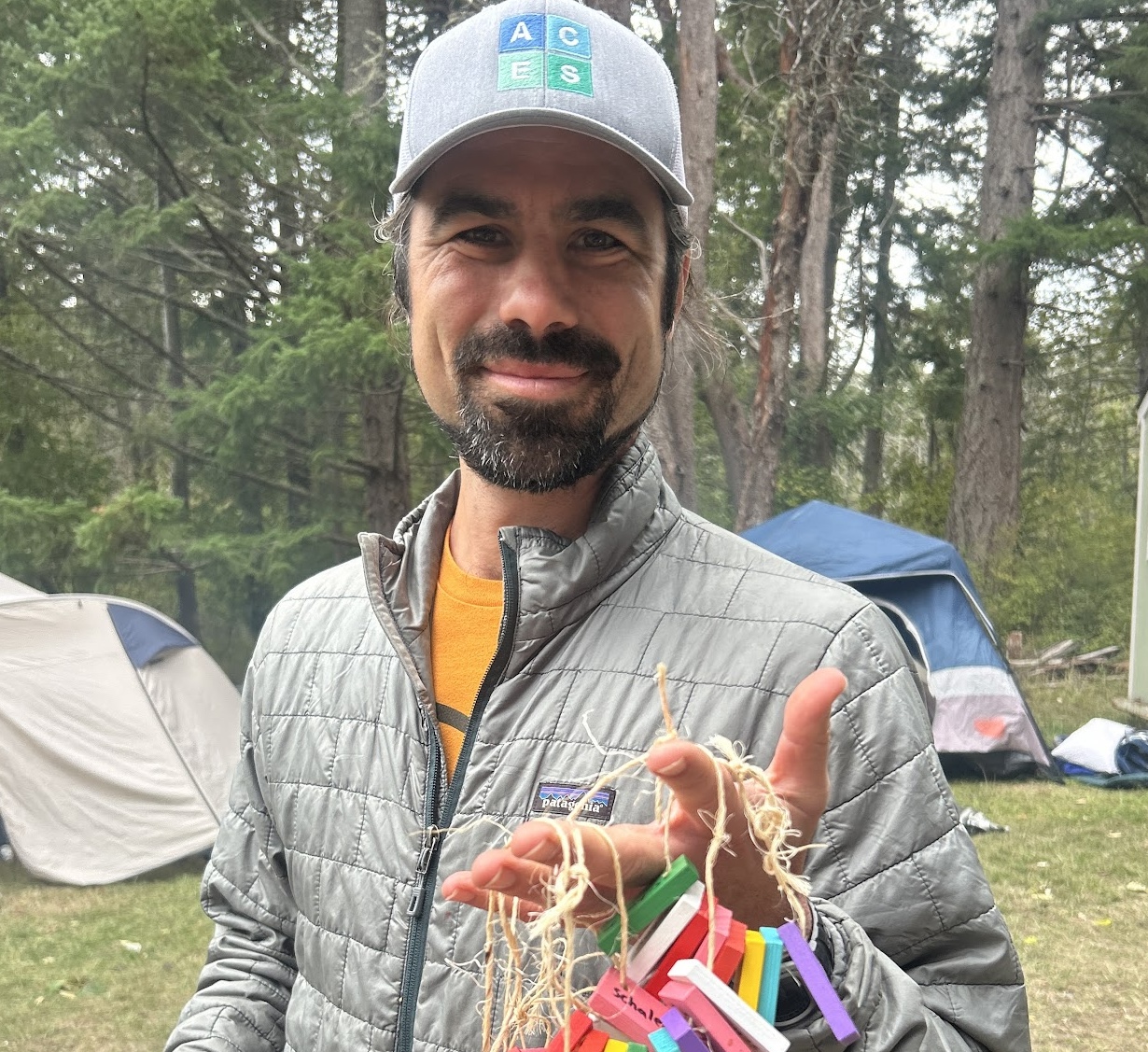
Travis Tennessen, Ph.D.
Director, Center for Community Learning
Talk Tiles: Encouraging Voice and Agency in Learning Environments
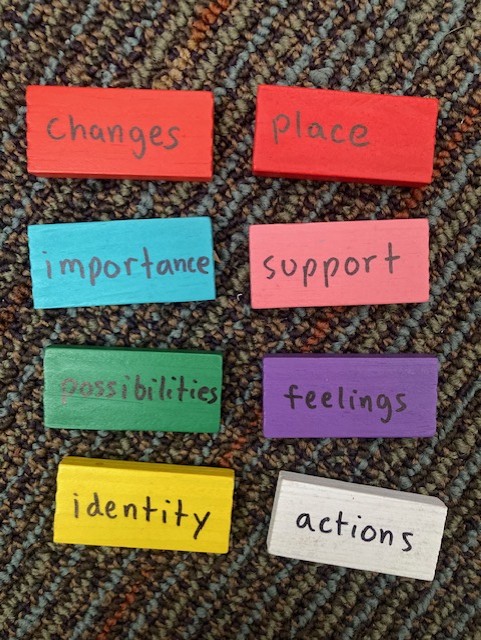
As Director for the Center for Community Learning (CCL), a central theme of Travis Tennessen’s work is convening people within Western—and beyond—for a wide variety of collaborative learning opportunities. Through that work he developed Talk Tiles, a simple tool that encourages and enhances voice and agency in learning environments. Each Talk Tile represents one dimension of Beverly and Etienna Wenger-Trayner’s value-creation framework for social learning (Wenger-Trayner 2020). The simple words – feelings, possibilities, actions, changes, identity, support, importance, place – point learners toward different dimensions of life and learning, empowering them to express themselves more fully and take ownership of their own learning.
These Talk Tiles act as a physical representation of one dimension of Beverly and Etienne Wenger-Trayner’s value-creation framework for social learning (Wenger-Trayner 2020). Travis’s aim in developing Talk Tiles was to help people “think with” and “learn with” the framework easily to:
- Enhance the impact of programming through deepening and broadening the learning,
- Increase the legibility and accessibility of social learning spaces, and
- Make the work of social learning facilitators easier.
Travis has been delighted and amazed at how well Talk Tiles resonate with a wide variety of people, and that many others have begun to use them in their own settings around the region and the world.
Rather than encouraging shallow reflection on one’s study, closely investigating the multiple dimensions of a learning experience can enrich education and conceptual understanding of the subject content. Their flexibility allows them to be adapted into a wide range of student learning environments. They can be:
- Drawn from a bowl or side table,
- Passed around the classroom, or
- Connected to create an overarching narrative.
Overall, Talk Tiles are a helpful and proven tool for promoting greater student engagement and agency by actively encouraging deeper reflection and dialog about one’s learning experience.
Claudia Johnson
Access to Justice and Technology, 412 E Fairhaven College/Law Diversity and Justice
In this class I empower students to design an innovation tech driven or otherwise to an existing well identified Access to Justice problem for a specific community that has not yet been addressed. The definition of Access to Justice (ATJ) we use comes from the UN 2012 definition, and it is broad and helps identify different areas where innovation can breach the gap in services. Right now, there is only one public interest lawyer per 10,000 people who need and qualify for one.
The first part of class consists of reading primarily from the Harvard Law Journal and other sources about Access to Justice in the US and in WA. We look at a variety of sources and study initiatives and evaluations of significant innovations in this space. We read and discuss standards published by the American Bar Association, the Supreme Court of Washington that are the guidance on how to implement technology when working within a court or legal nonprofit on legal issues. We actually look at national projects like lawhelpinteractive.org (document assembly) and more as models. We read and discuss about design methodologies, Agile, how to use a value proposition to design a tech intervention using the Canva value proposition materials, and readings about how technology needs to be designed to avoid biases or unexpected harm and actually be helpful for the intended audience.
The second part of class consists of groups identifying the area of need, the community that will benefit from their innovation, and designing a tech tool/prototype idea using the skills they have and using the models discussed in class as starting places. I require them to provide sample terms of service that are transparent about data collection, data retention, and proposed use of the data beyond providing the service. They also write a “pitch” that then they present to class where they describe the area of need, their approach, why the approach is best, potential areas of concern, budget, staffing. These skills are often new to our students. They learn how to write in plain language, and how to design webpages to make them easy to use for users at every level of education and literacy. The groups work independently and collectively when we meet. They get free reign on the final solution with support from me and the other students. Most students end up surprised and pleased with their prototype.
Because most of the students in the class are not STEM students—while at first they are intimidated, at the end of the class they gain a new confidence, and some change their perception to one of creators and innovators. They deliver webpages, chats, hotlines, automated forms, or a combination of tools to respond to the need and community centered. In a period of 10 weeks, they learn how to be self-driven creators of innovative solutions. They develop basic skills, and enough vocabulary and hands of experience should they ever want to go into social justice technology and nonprofit tech fields.
The assignments include self-reflective pieces, learning about plain language writing as used in the legal tech environment, reflecting on what they learned about writing for audiences with limited literacy and limited time or tech capacity, often diverse and multilingual. They learn how to create a budget. The final presentation is a “pitch” where they present to the class the final product, the space and community that will benefit from the intervention, budget to go from prototype to product, etc.
Every year, student groups deliver new prototypes. Some have been in the context of litigants without lawyers; other prototypes have tackled utility rate increases, using non licensed community volunteers to help with legal problems in a “sandbox” model, creating a translation tool that can use AAVE and translate it to plain language in court transcripts or during attorney/client interviews for purposes of testimony, court record transcription, or affidavit writing. The creativity and quality of the projects is always inspiring.