
2013-14 Innovative Teaching Showcase
Portfolio

Rebekah Green
Huxley College of the Environment
Unlikely Confession of a Blended Learning Convert
Unlikely Confession of a Blended Learning Convert
Introduction
I have always been skeptical about online teaching. I have a hard time believing that students will get as much out of such an experience as they would in a traditional classroom. I may still believe this to be true in many cases, but after some personal experimentation with a blend of online and in-class communication, I've had to admit that there are some real advantages for students. Not only have I been forced to break out of my sage on the stage teaching methods, but I've pushed myself further in terms of trying new technology, which was a major goal when I began my journey.

Today I want to share some of my successes and failures over the past four years, and what I learned along the way.
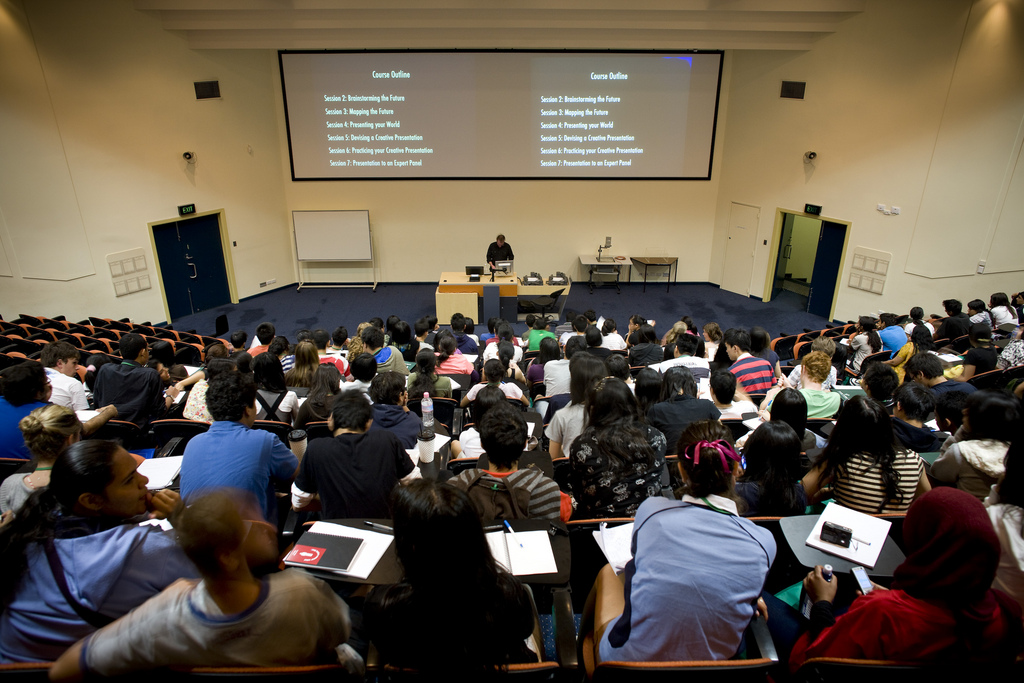
There is too much to cover for most courses in the usual 10-week quarter, and most faculty teaching resource management courses find themselves frustrated about what to leave out. Before I started experimenting with online learning, I had always felt proud of the amount of material I could cover in a quarter. Given the choice of breadth versus depth, I had been a breadth girl. Unfortunately, pushing my students through more content has not necessarily resulted in their understanding it more deeply, and depth is what students need to succeed. I realized I was going to need new tools and began experimenting with a blend of in-class and online interactions. I thought it would free up my time in class and allow us to discuss topics in more depth.
A Bit of Blending in a Traditional Classroom
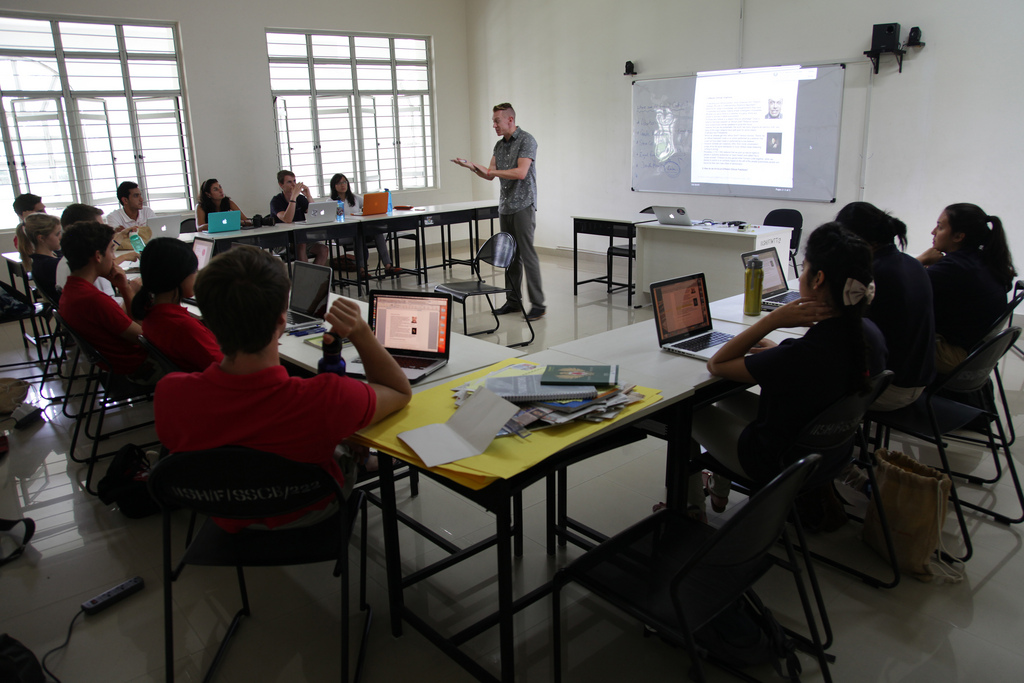
First, a couple of minor adjustments. A friend mentioned that one of her son's instructors had encouraged students in large classes to form small "learning communities" and provide support for each other for the duration of the quarter. I thought this would be a good way to encourage dialogue in my large (72 students) aquatic field biology class. I tried this out in Fall 2011. I assigned students to learning communities during the second week of class and asked the students to meet briefly face-to-face every day after class to check in. They were also expected to create an online group journal in our Canvas course management system where they could post questions and comments, and support each other throughout the quarter. As an instructor, I was able to pop in to the journals every once in awhile to see what was going on. If there was a problematic question or comment, I could respond; otherwise I just let them talk. It seemed to help. There were a couple of groups that did not "take off," but most did and students were reluctant to change groups mid-quarter when asked. At the end of the quarter, my course evaluations asked about this particular assignment and students rated it highly.
For the learning communities, I would not want to change anything about them. They didn't feel forced, and each person had something unique to bring to the discussion. The problems people found on their own (not in class, not necessarily in the book) were really helpful.
I thought the learning communities were the best part! They allowed us to collaborate and organize what we were learning in class.
Learning from this: Keep the online dialogue simple. Ask students to generate and respond to each other's questions.
Blending with Online Courses
At around the same time, I was developing a fully online course about fish, fisheries, and resource management. I wanted to include some sort of interactive, mini-lectures but didn't know where to start. I really appreciate some of the Khan-academy-style videos, so I wanted to do something similar. The Student Technology Center was able to get me set up with a drawing tablet and software (Camtasia Studio) so that I could record myself writing/drawing and speaking on slides I created in PowerPoint. I recorded and edited these lectures in Camtasia Studio video editing software and posted them online in our course Canvas site. They've worked great! Other instructors have talked about "flipping" the classroom—where lectures are watched at home and discussions/problems are done in class—but for a fully online course, the mini-lectures allowed me to deliver content and free up the synchronous class time (weekly meetings using Adobe Connect) to discuss and work through problems and questions.

I also felt the course needed weekly small-group, online discussions to keep the students on track. I created timed quizzes that became available on a particular day to encourage students to complete the lectures and reading in a timely fashion so that they would be prepared for our synchronous, weekly meetings. The synchronous meetings and online discussions have been hugely important for our course. I can't imagine doing it without. These discussions were done in small groups (3-4 students) in our Canvas site. The discussions themselves helped provide a framework for the course because each question corresponded to a new topic or two that we were going to cover. I also think I got better at writing these questions over time. Initially I did not realize that I should be posing questions that were harder—that require some new synthesis or application of the material. I did not need to ask them to summarize or repeat back what they read. They can do that on their own. I can check to see that they've gotten the basics by using simple quizzes. The weekly online discussions, however, should push them to think more deeply about what they learned. I've had to revise many of these questions over the years, but I think students get more out of them now.
The 'active' nature of this course (quizzes, discussions, games, synchronous meetings) kept me engaged even though I never stepped foot in an actual classroom.
The video clips were the best thing ever. Very Khan-academy like. I could pause them, go back and rewatch them, and take notes at my own pace.
Learning from this: Provide time and guidance for students to discuss and synthesize new information in whatever forum works for the course. This might be during face-to-face lectures, or asynchronously and online, or synchronously with Adobe Connect (or similar).

I also wanted students to be able to apply what they were learning, so I created a game, of sorts. I had a friend who worked at NOAA's Northwest Fisheries Science Center teach me about a model that they use to simulate the population dynamics of Pacific salmon under various fishing scenarios (CRiSP Harvest). We turned this into an online game where small groups of students play the role of fisheries managers trying to manage a simulated Bristol Bay sockeye salmon fishery sustainably for 20 years. This was a great way to draw on all the different pieces of the course and get students working together to make management decisions. Each group of students would meet online using our Collaborate web-conferencing tool once or twice per week in order to play the game. They would discuss their options, make decisions, and then see the results. I could check in on group meetings remotely by "raising my hand." My favorite part was watching a conversation switch from typed chat messages to their using the microphones for the first time.
The online fisheries management game and presentation was a fantastic cumulative learning experience that tested what I had learned throughout the course and was also a lot of fun, and I became much closer to the people in my group over the course of completing this project.
I would love to see all online classes have some kind of meeting like this that requires students to meet face-to-face (well, virtually face-to-face). It greatly helped my understanding because you could voice your questions freely in the moment, and because it was required, you couldn't easily skip it.
Learning from this: Provide opportunities for students to apply what they've learned even in fully online courses. Technology has progressed so that students can meet synchronously, share a whiteboard and screens, and "see" each other.
Reflections on Blending
The students taking online courses often have jobs and families—things that get in the way of regular university attendance. I think online, or blended courses, can be a real asset to these students. It was also a learning experience for me and pushed me further along my teaching and technology journey. I've found that it is actually a lot of work to create a good online experience for students, but it is entirely possible. I spent a lot of extra time during the first few offerings of the online course, but each time it's gotten better and I've been able to fine-tune it. The main effort is in developing a course the first time around. After that, things are already set up and you can focus on helping the students learn and making adjustments where you see fit. It can also be very flexible. I've been able to teach my online course, and assist students with my in-person classes, while doing field work in Friday Harbor or while visiting family out of state. If I hadn't tried these new teaching methods I would never have been exposed to the technologies that I now use for my courses. I use some of the same tools for my traditional courses: mini-lectures, weekly quizzes, online discussions, weekly web-conferencing meetings, and interactive simulations. I think I'm doing a better job overall and my students seem to have a deeper understanding of the material and greater engagement with each other and me.

This has been the best online class I have taken. I actually got to know my classmates and my teacher to a certain degree, which is pretty amazing since it was all online.
I really liked this online format. It was much better than any other I have experienced. I liked having multiple different methods of content delivery-it kept me engaged and motivated to keep working.
The Student Technology Center has been enormously helpful in getting me to this point. I would never have attempted any of this on my own. My experience has taught me to try new things even though they are scary and may not work out the way you want. But they'll get you on the path you need to take. I'm looking forward to new challenges and, of course, more experimentation.
Suggested Resources
Clark, R. C., & Mayer, R. E. (2011). E-learning and the science of instruction: Proven guidelines for consumers and designers of multimedia learning. San Francisco, CA: Pfeiffer.
Khan, S. (2012). The one world schoolhouse: education reimagined. New York, NY: Hachette, Inc.
Nilson, L. B. (2010). Teaching at its best: A research-based resource for college instructors. San Francisco, CA: Jossey-Bass.
Vander Ark, T., & Schneider, C. (2012). How Digital Learning Contributes to Deeper Learning. Getting Smart. Available: http://gettingsmart.com/cms/news/uncategorized/how-digital-learning-contributes-to-deeper-learning
↑ Go to top